




Personal Information
- Birth date
- 19 июн. 2000 г. (26 years old)
- Special circumstances
- Ukrainian citizen, military servicemember
- Notes
- Sergeant, OOSpN NGU "Azov", military unit A3057. 15.05.2026 released in a prisoner exchange
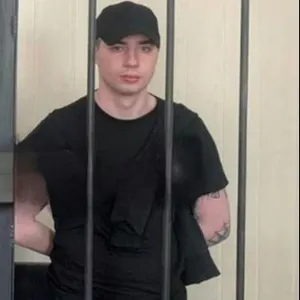
Vyshnyak Artyom Stavrovich (Vishnyak Artem Stavrovich)
Case Information
- Region of case initiation:
- Donetsk Oblast
- Detention date:
- 18 мая 2022 г.
- Charges:
- Article 105 of the Criminal Code of the Russian Federation, Part 2, Paragraph a, Article 105 of the Criminal Code of the Russian Federation, Part 2, Paragraph e, Article 105 of the Criminal Code of the Russian Federation, Part 2, Paragraph j, Article 105 of the Criminal Code of the Russian Federation, Part 2, Paragraph l, Art. 30 CC RF Part 3, Art. 167 CC RF Part 2, Art. 356 CC RF Part 1, Article 105 of the Criminal Code of the Russian Federation, Part 2, Paragraph v, Art. 205.3 CC RF, Art. 205.4 CC RF Part 2
- Sentence:
- 22 years 6 months maximum security, 24 years maximum security,
- Court that passed the sentence:
- Supreme Court of the Donetsk People's Republic, Southern District Military Court
- Judge who passed the sentence:
- Kovalenko Aleksey Aleksandrovich, Aleksandrov German Ivanovich, Degtyarev Igor Petrovich
- Case on the court website:
- vs--dnr.sudrf.ru, vs--dnr.sudrf.ru, yovs--ros.sudrf.ru
- Appeal court:
- First Court of Appeals of General Jurisdiction
- Appeal judge:
- Ulyanova Tatyana Nikolaevna
- Estimated release date:
- 16 мая 2046 г.
- Case categories:
- War-related, Occupied territories, POWs, Azov
- Rosfinmonitoring status:
- Added 7 окт. 2025 г.
Case Description
On May 18, 2022, in Mariupol, in the occupied Donetsk region, during combat operations at the Azovstal plant, a group of more than 300 people left the plant’s premises, laid down their arms, and surrendered to Russian forces.
Among them were ten Ukrainian citizens—members of the Azov Regiment: Artem Vyshnyak, Ivan Nozhechkin, and their subordinates Sergei Samokhval, Sergei Gaikovich, Semyon Severin, Dmitry Klusenko, Yevgeny Lavrenko, Denis Fedirko, Yegor Yakovenko, and Dmitry Kucheryavy.
A criminal case was later opened against them on charges of attempted murder of two or more persons by means posing a danger to the public, motivated by hatred and hostility; the use of prohibited means and methods in an armed conflict; and the intentional damage to another’s property.
According to the Russian investigation, from March 7 to April 15, 2022, on the orders of Vyshnyak and Nozhechnik, military personnel fired mortars at residential buildings and socially significant civilian infrastructure sites in Mariupol. More than 100 rounds were fired, damaging three buildings. All civilians managed to escape by taking shelter.
On March 22, 2024, the Supreme Court of the Donetsk Republic found the defendants guilty and sentenced them to prison terms ranging from 22 years and 2 months to 22.5 years in a maximum-security prison.
The verdict was not appealed and became final.
On February 5, 2026, Denis Fedirko was released during a routine prisoner exchange between Russia and Ukraine.
On October 23, 2026, Dmitry Klusenko and Yevgeny Lavrenko were released during another prisoner exchange between Russia and Ukraine.
Later, a second criminal case was brought against Artem Vyshnyak, Semyon Severin, Sergey Gaykovich, and Sergey Samokhval. They were charged with attempted murder, intentional damage to property, and cruel treatment of the civilian population using prohibited methods of warfare.
According to the Russian investigation, in March 2022, Vyshnyak, serving as the gunner of a mortar crew, ordered Severin, Gaykovich, and Samokhval to shell the village of Berdyanskoe in the Mangush District of the “DPR.” As a result of the shelling, four residential buildings were damaged.
On June 26, 2025, the Supreme Court of the Donetsk People’s Republic found the defendants guilty and sentenced Artem Vyshnyak to 24 years, Semyon Severin to 32 years, Sergey Gaykovich and Sergey Samokhval 31 years of imprisonment in a maximum-security prison.
On October 8, 2025, the First Court of Appeals of General Jurisdiction modified the sentence; details are unknown.
A criminal case was also brought against Artem Vyshnyak for participating in a terrorist organization and undergoing training for the purpose of carrying out terrorist activities. The basis for the criminal prosecution was his service in the ranks of the Ukrainian Armed Forces’ nationalist “Azov” battalion, which is recognized as a terrorist organization in Russia.
Co-Defendants (9)

Gaykovich Sergey Takhsinovich (Gaykovich Sergiy Takhsinovich)
Donetsk Oblast
Klusenko Dmitriy Andreevich (Klusenko Dmitro Andriyovich)
Donetsk Oblast

Nozhechkin Ivan Sergeevich (Nozhechkin Ivan Sergiyovich)
Donetsk Oblast

Samokhval Sergey Sergeevich (Samokhval Sergiy Sergiyovich)
Donetsk Oblast

Severin Semyon Vladimirovich (Severin Semen Volodimirovich)
Donetsk Oblast

Fedirko Denis Vladimirovich (Fedirko Denis Volodimirovich)
Donetsk Oblast
Kucheryavyy Dmitriy Vladimirovich (Kucheryaviy Dmitro Volodimirovich)
Donetsk Oblast
Lavrenko Evgeniy Yurevich (Lavrenko Yevgen Yuriyovich)
Donetsk Oblast
Yakovenko Egor Igorevich (Yakovenko Yegor Igorovich)
Donetsk Oblast
Write a Letter
The simplest and quickest way to support a prisoner is to send them a letter. We will help you choose a pen pal and tell you where to send the letter!
Make a Donation
It is important to support prisoners financially. You can help pay for legal defense or fines through Zaodno.org platform or other human rights organizations.
Spread the Word
People in Russia and around the world need to know about those who are trying to stop the war! Tell others about individual stories and about this project.